There are certain moments when the idea of a trip is enough to rest the mind, to put order in the chaos of everyday life. And when you need a place to take refuge, a deserted island is the first thing that comes to mind, the topos par excellence. But whether you really want to reach them or dream of them with more details at your disposal, here are seven remote islands waiting for you in the Pacific to free your mind and discover sensational landscapes and cultures.

The remote islands of the Pacific have not only beaches to offer, but an ancient culture, in great connection with nature©Matteo Colombo/Getty Images
1. 'Atiu, Cook Islands
Caves, birds and drink according to local custom.
Before the arrival of the Europeans, 'Atiu had a fair amount of power in the region and its warriors were known for their ferocity and cruelty in combat. Today, however, this rocky island surrounded by coral reefs is known for far less cruelty. The 'eco-capital' of the Cook Islands, it is a paradise for naturalists and birdwatchers, but is also a great destination for travellers in search of an island bound by tradition.
What to see and do
The deep limestone caves hidden in the meanders of the overgrown makatea are the most famous feature of 'Atiu. It is essential to carry a torch and wear sturdy shoes, as the coral is razor-sharp. The main caves are located on private property and you will need a guide to visit them. Many caves were used for burials; keep in mind that it is tapu (taboo) to disturb the bones, if you don't want to be haunted by a curse.
Lake Te Roto is known for its itiki (eels), a renowned island delicacy. On the western shore, a cave leads down to the sea via the makatea.
If you feel like going to the beach, we recommend:
-Taunganui Harbour and Oravaru Beach The best place to swim is Taunganui Harbour, on the west coast, where the water is clear and deep.
-Taungaroro and Tumai South of Oravaru Beach are Taungaroro and Tumai, the two most popular beaches for swimming.
-Takauroa Beach One can only swim in the three enchanting sinkholes to the west of Takauroa Beach at low tide, when between Takauroa Beach and Matai Landing the lagoon dries up through these hollows and the fish become trapped in a natural aquarium known as the Coral Garden.

Aerial view of Raivavae Island, French Polynesia
2. Raivavae, French Polynesia
As magnificent as Bora Bora, but with one of the country's most authentic cultures.
Raivavae is a paradise, not only for its vast blue lagoon, beautiful white sandy motu and mountainous hinterland dominated by the square peak of Mont Hiro (437 metres), but also for the warm welcome of the Polynesians and the extraordinary opportunity to get in touch with the traditional way of life. Curiously, despite being considered one of the great beauties of the South Pacific, the island is visited by very few tourists.
What to see and do
The enchanting Raivavae Lagoon, teeming with marine life and surrounded by guaiac tree-covered motu, is one of the treasures of the South Pacific. Motu Piscine (literally 'pool motu'; Motu Vaiamanu) is the best-known motu, fringed with white beaches and with a channel with clear turquoise waters, teeming with tropical fish, separating it from the neighbouring motu. Absolutely fabulous.
3. Ta'u, American Samoa
Humpback whales, birds, spectacular mountains, a rugged coastline... and little else.
On the spectacular south coast of this remote and sparsely populated island stand some of the world's highest cliffs. The island's dense rainforests are the habitat of flying foxes and numerous native bird species. Ta'u is also the only habitat of the Pacific boa.
What to see and do
Saua Site
This sacred site is where Tagaloa created the first humans before sending them to Polynesia. The place is shrouded in an ancient, almost supernatural atmosphere and is characterised by volcanic boulders, strong waves and a windswept beach. Some short paths lead to the main archaeological area and several crags have been erected as shelters.
Judds Crater (Luatele Crater)
Trekking to this huge volcanic crater should only be attempted by experienced hikers accompanied by a guide; contact the National Park of American Samoa well in advance to hire one for the hike. The hike takes about three hours (one way) from the road near Fiti'uta.
The Valley of Giants
The island's otherworldly atmosphere is not limited to the land: the surrounding waters are home to one of the largest, oldest and most mysterious coral colonies on the planet. Known as the Valley of Giants, this extraordinary reef is populated by huge 'boulders' of living coral of the genus Porites. The largest is the gigantic Big Momma, which reaches a height of 6.4 metres and a circumference of 41 metres, and is believed to be at least 530 years old.
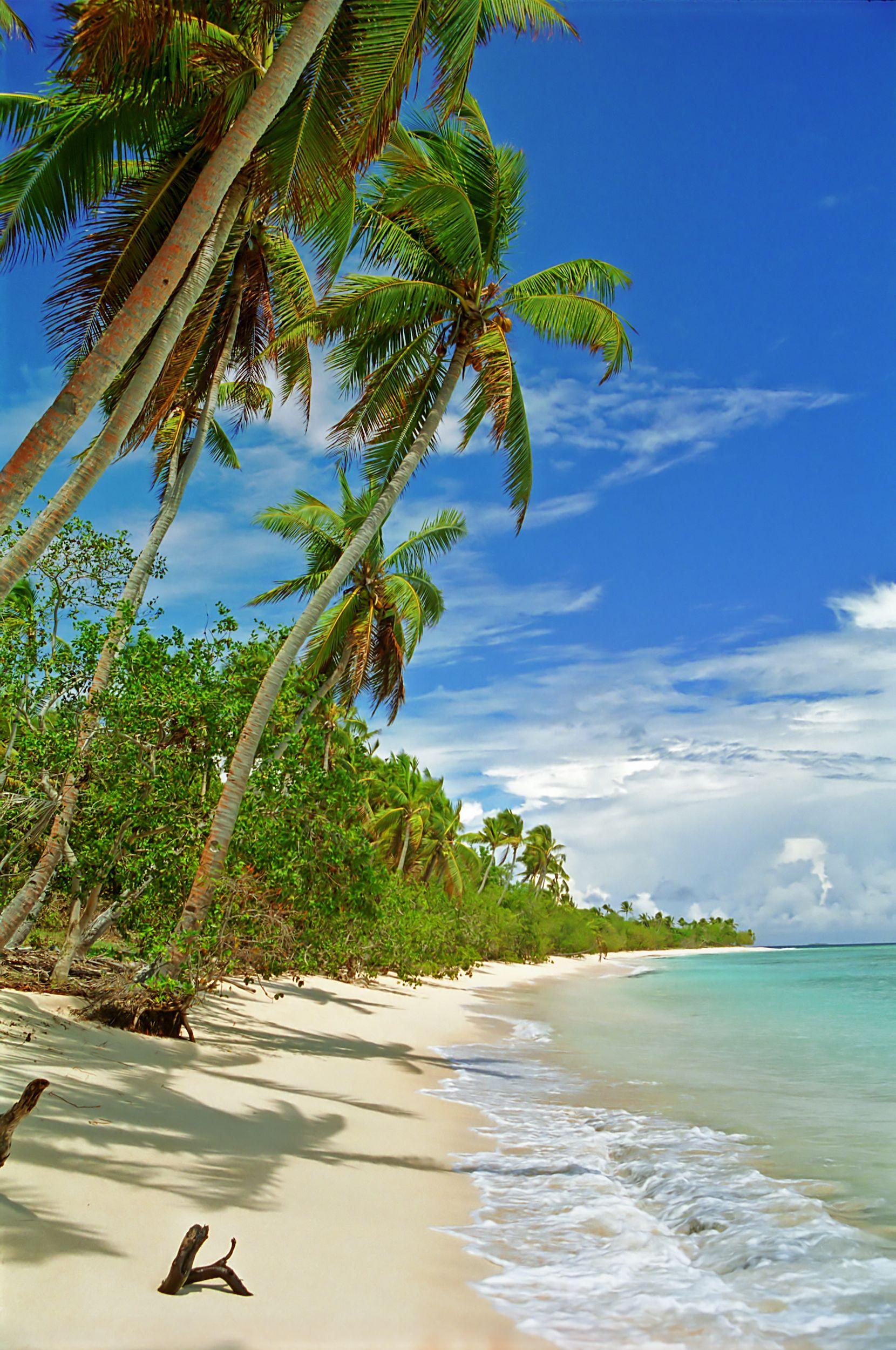
The enchanting beach of Uoleva, Tonga ©LimeWave - inspiration to exploration/Getty Images
4. Uoleva, Tonga
A paradise for beach lovers, with whales passing offshore.
Robbed a bank? Want to escape a tax evasion charge? The island of Uoleva, just south of Lifuka, is the ideal place to hide. Inhabited exclusively by guesthouse owners (there are no villages), it offers an authentic South Pacific experience with little else to do but swim, snorkel, fish, read and relax (and study the best escape route in case the cops knock on the door). Whales swim close to the coast here during migration (June to October) and are sometimes seen making great leaps just off the island.
Accommodation and meals
There are no shops or restaurants on Uoleva. Bring enough food supplies or eat at your accommodation.
Sign up for our newsletter! For you weekly travel tips, special offers, stories from the world and 30% discount on your first order.
5. Maskelyne Islands, Vanuatu
Get in touch with village life, go to a kava bar and taste Indo-Pacific crab.
The main attractions, apart from the quiet village life, are the coral reefs and marine reserves, swimming, snorkelling (you will have to bring your own equipment), canoeing and fishing trips; it is then up to you to decide whether to organise independently or join an organised tour.
The group's main island, Uliveo (Maskelyne), is a cosy place where the only accommodation is located. Here you can see the inhabitants busy building canoes, weaving everyday objects, making necklaces and scouring the coastline for edible sea creatures when the tide goes out.
What to see and do
Take a guided excursion in a Polynesian canoe to the Ringi Te Suh Marine Conservation Area, a 100-hectare reef protected by the villagers of Pellonk (the name of the reserve means 'leave him alone'). You can snorkel over the beautiful Giant Tridacne Garden and picnic on an artificial island.

The reef of the Sawa-I-Lau Caves, Fiji
6. Lau Group, Fiji
Push on to these beautiful, unspoilt and little-known islands.
The Lau Group is Fiji's last frontier: some sixty islands scattered in the south-eastern corner of the vast archipelago and visited by few travellers. Those who venture here find countless bays, deserted atolls surrounded by reefs and sparsely populated islands with mountainous hinterlands.
The Lau people are famous for the art of wood carving and masi (bark cloth) making; their culture is influenced by neighbouring Polynesia. Although the climate is drier than in the rest of Fiji, violent storms can occur, so that some bays are used by passing yachts as shelter from hurricanes.

A lagoon on the island of Maré, New Caledonia
7. Maré, New Caledonia
Discover Kanak culture in the Loyalty Islands.
With its picturesque coastline fringed by beautiful beaches and jagged coral reefs, a hinterland that holds interesting natural pools in the ravines of the land and a mysterious stone building, it is no wonder that Maré's geographical peculiarities have inspired several legends.
What to see and do
Aquarium Naturelle
About 3 kilometres south of Tadine, a large natural pool carved out of the rocks is a kind of aquarium connected to the sea by an underground canal. Here you can admire Napoleon fish, parrot fish, wrasses and sometimes even turtles swimming in the translucent water. The site is indicated by signs at a parking area next to the main road.
Trou de Bone
About 3 kilometres from the La Roche-Tadine road, on the way to Thogone, is the Trou de Bone, a deep rock cavity whose steep sides descend to a lush tropical garden and a natural pool.
Shabadran
This beautiful and secluded beach at the south-eastern end of Maré, surrounded by cliffs and forests, can be the destination of a fantastic day hike. You must be accompanied by a guide